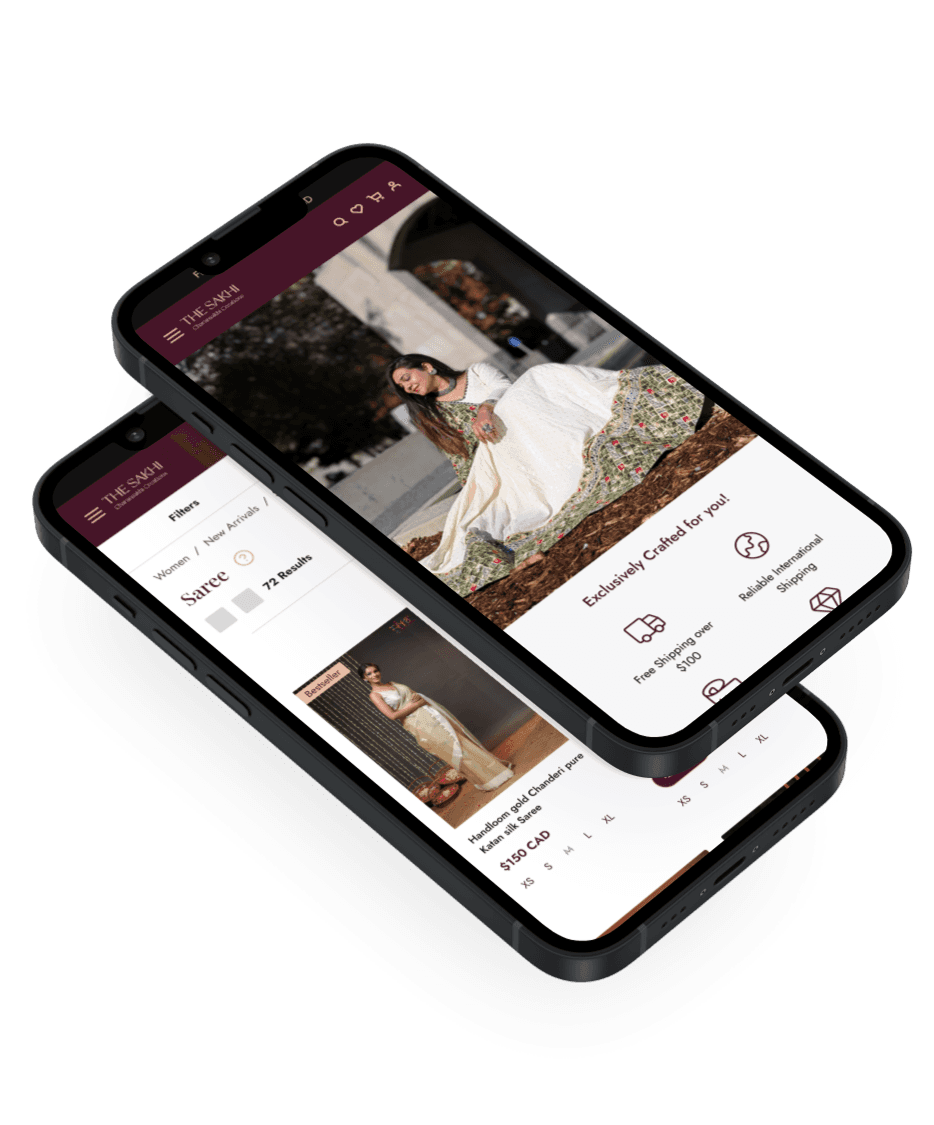
THE SAKHI
ROLE
UX Researcher
COLLABORATORS
Camila Diarian
John Jang
SKILLS
Competitive Audit
User Interviews
Insight Synthesis
DURATION
5 months
CHALLENGE
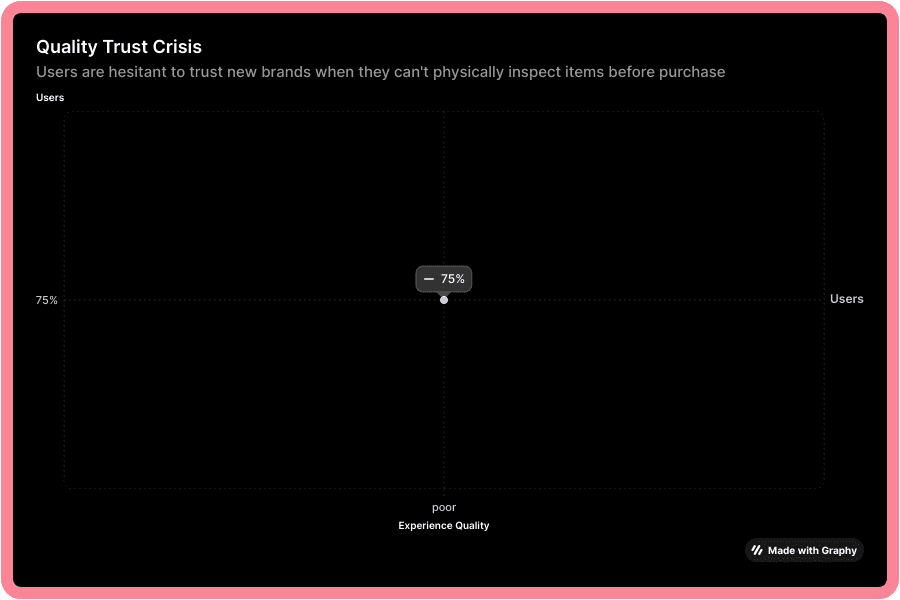
Building trust in a new brand with no existing customer base
Sakhi entered the market without a reputation or loyal audience, making users hesitant to invest their time or money. In an industry where authenticity and product quality are non-negotiable, earning trust quickly was the most critical hurdle.
UNDERSTANDING
Target Audience
Trend Followers
Users from the USA, UK , and Canada interested in Indian fashion trends.
Cultural Admirers
Non-Indians who appreciate the cultural and artistic expression of Indian fashion.
Frequent buyers
Frequent browsers and buyers of Indian clothes and accessories.
UNDERSTANDING
Business Goals
Build initial brand awareness and attract early adopters within a limited marketing budget
Design a user-friendly and visually appealing website that clearly showcases product offerings without costly custom features
Create a straightforward shopping experience that encourages browsing and purchasing while minimizing development complexity
Establish trust with clear product details, return policies, and customer support information despite limited resources for extensive content or advanced features
RESEARCH APPROACH
Understanding users to build a better brand
We performed a competitive audit of 5 similar e-commerce platforms to identify industry standards and design gaps.
We ran a survey with 47 participants:
68% found sizing and fabric details confusing
52% emphasized the importance of clear return policies
We conducted 6 in-depth user interviews to explore behaviors, expectations, and frustrations.
We used open card sorting to understand how users mentally group product categories and improve navigation.
We conducted a heuristic evaluation using Jakob Nielsen’s 10 usability heuristics to validate user insights and identify additional usability issues.
We synthesized findings using affinity mapping to guide design decisions within budget and scope constraints.
Discovery Research
Understand People's
Needs
Gather Information
In Affinity Map
Data Analysis
Generate Insights
Turn Insights Into
Problem Statements
Generate Plan To
Solve Each Problem
INSIGHTS
Product Page
Users are concerned about sizing accuracy and material details when shopping online, emphasizing the need for comprehensive product information. They prefer to see all relevant details, such as sizes, weight, materials, and reviews with photos, on a single page to facilitate informed decision making.
Sizing details are very important for users, as most of them claim that fitting sizes for Indian clothing must be very precise. This is one of the main reasons that stops women from buying online.
Research Study
The product description should have more
visuals and more practical information like length.
Research Study
It would be better to see all the information
(from description to reviews) on one page
without in need to click a button.
Streamline Navigation
Users are concerned with the number of clicks required to access essential information and features, such as viewing items in their wish list and accessing product details. They prefer a more streamlined experience where relevant information is visible without excessive navigation. Reducing the number of clicks needed to interact with key features could enhance user satisfaction.
1
click
2
click
3
click
4
click
VS
1
click
Customer Trust
Factors that Build Trust in an E-commerce Website:
Trust in a digital e-commerce platform is primarily built through clear return policies, high-quality visuals, customer reviews, and professional website design. Users seek detailed product images from various angles, ample product variety, and easy navigation to feel confident in their purchases.
Factors that Undermine Trust in an E-commerce Website:
Trust can be undermined by a lack of reviews, minimal product information, poor site navigation, or slow performance, which raise concerns about legitimacy and product quality.
Trust hinges on transparency and user experience
Return and Shipping Policies
Users are seeking clear, easy to understand return policies and more information on shipping and refunds to enhance their confidence when purchasing. The lack of transparent return and shipping information is causing uncertainty, which negatively impacts trust and may prevent users from purchasing.
Categories
Users who browse previous e-commerce platforms tend to look for products in categories like Hot Sales, What's New, or Recently Viewed, as they are influenced by new items and discounted offers.
Users find the categorization of clothing confusing, with unrelated styles and items mixed together. This creates a disjointed browsing experience, making it harder for users to find what they’re looking for. Improving the organization of categories and menus could enhance navigation and user satisfaction.
Users prefer browsing:
Sales and discount offers
What's new and recently viewed
Clear and organized category structure
Poor Organization
Harder Product Discovery
Lower Satisfaction
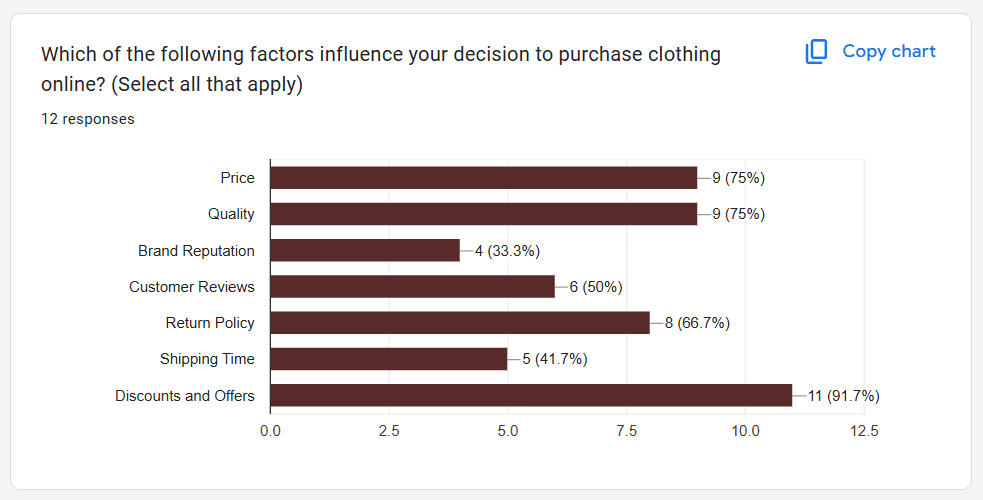
Discounts and offers (91.7%) outperform even basic factors like price (75%) and quality (75%).
This indicates that perceived value through promotions may be more compelling than absolute pricing.
The high influence of discounts suggests that strategic promotional campaigns could be key drivers for customer acquisition and conversion in online fashion retail
Compare Feature
Users were having trouble with the existing "compare" feature, as it doesn't work well or is confusing. Fixing this could help them make better product choices and improve their shopping experience, otherwise this problem may result in abandoned purchases.

Photo Quality and Consistency
Over edited images and inconsistent backgrounds diminish the perceived quality of products, leading to disappointment and distrust. High-quality, professionally taken photos with consistent presentation are essential for building trust and ensuring users feel confident in their purchases.
Clothing Preferences
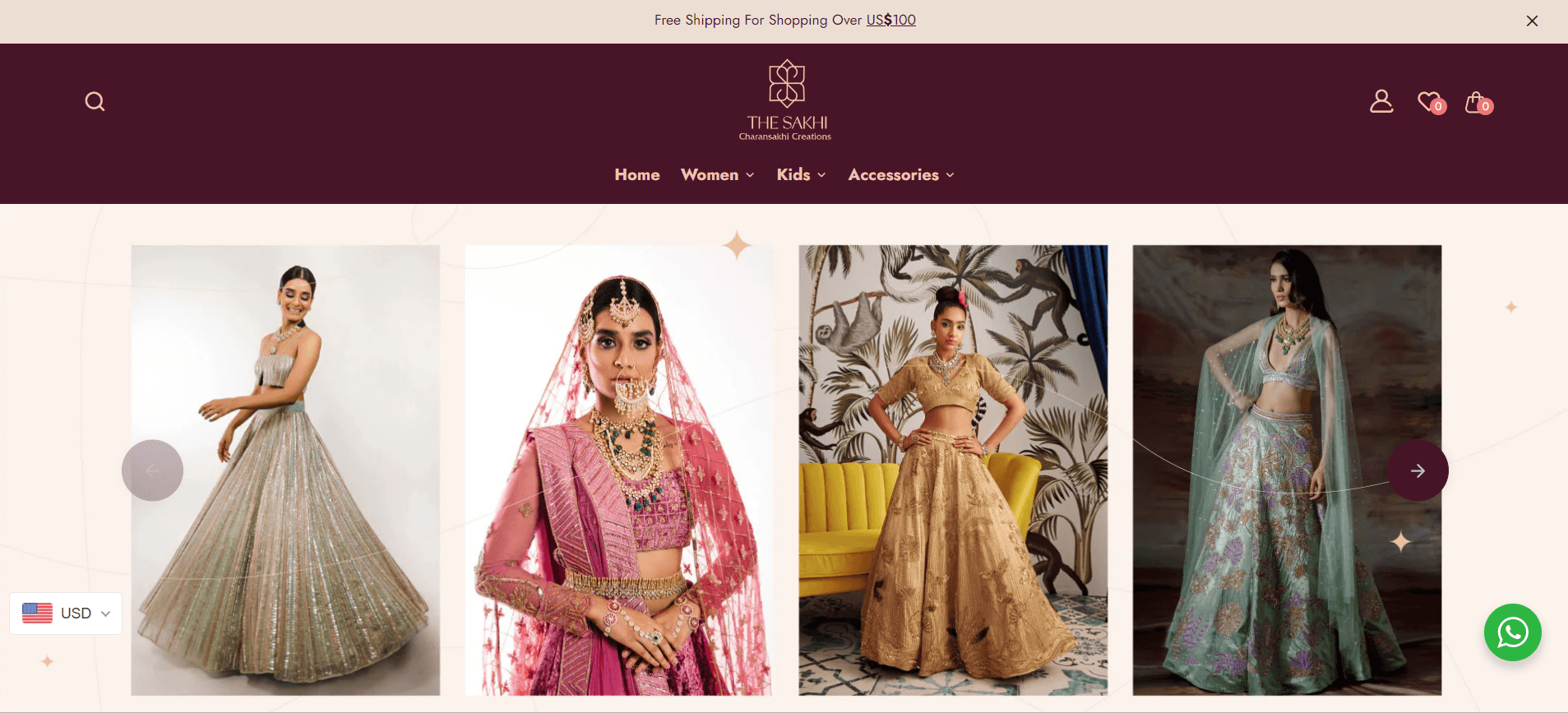
Users prefer a mix of traditional and Indo-Western outfits for events, with a strong preference for sarees, lehenga cholis, and color specific attire for weddings.
User interview participants tend to spend in Indian Fashion Clothes from $100 to $200.
Research Study
There is no influence of parents in terms of choice of my outfit.
Research Study
I would also buy an Indo Western because most of the weddings now have an event like a cocktail party or some where you would wear Indo Western, like not completely traditional um but like a fusion outfit.
Sustainability
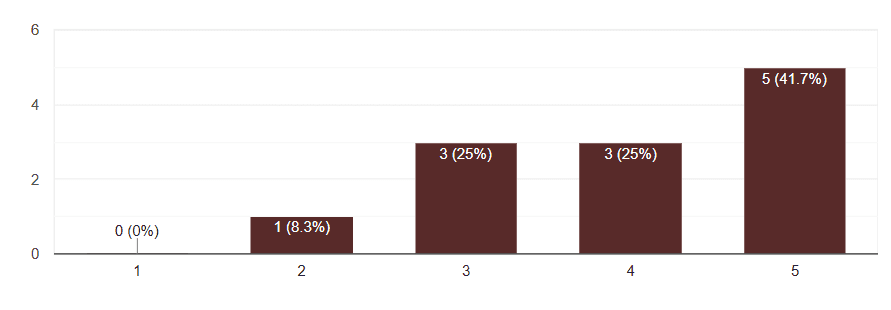
Sustainability shows strong positive sentiment in online clothing purchases, with 41.7% rating it as highly important (5/5) and zero respondents considering it unimportant.
Overall, 66.7% of consumers rate sustainability as moderately to highly important (4-5 ratings), indicating growing environmental consciousness in fashion purchasing decisions.
Virtual Assistance
Users value virtual assistance, such as chatbots, live customer service, or try-on features, as it provides guidance, boosts confidence in fit, and enhances the overall online shopping experience. Users feel comfortable having a virtual assistant on a website to guide them and provide reasonable information about the product.
Guidance
Confidence
Comfortable
Reviews
Users heavily rely on customer reviews to check product quality and trustworthiness, especially when shopping on new or unfamiliar websites. Mandatory, detailed reviews are seen as essential for a positive shopping experience.
New Sites
Critical for unfamiliar platforms
Trust Building
Verify website and seller credibility
Quality Check
Assess product quality before purchase
SOLUTIONS
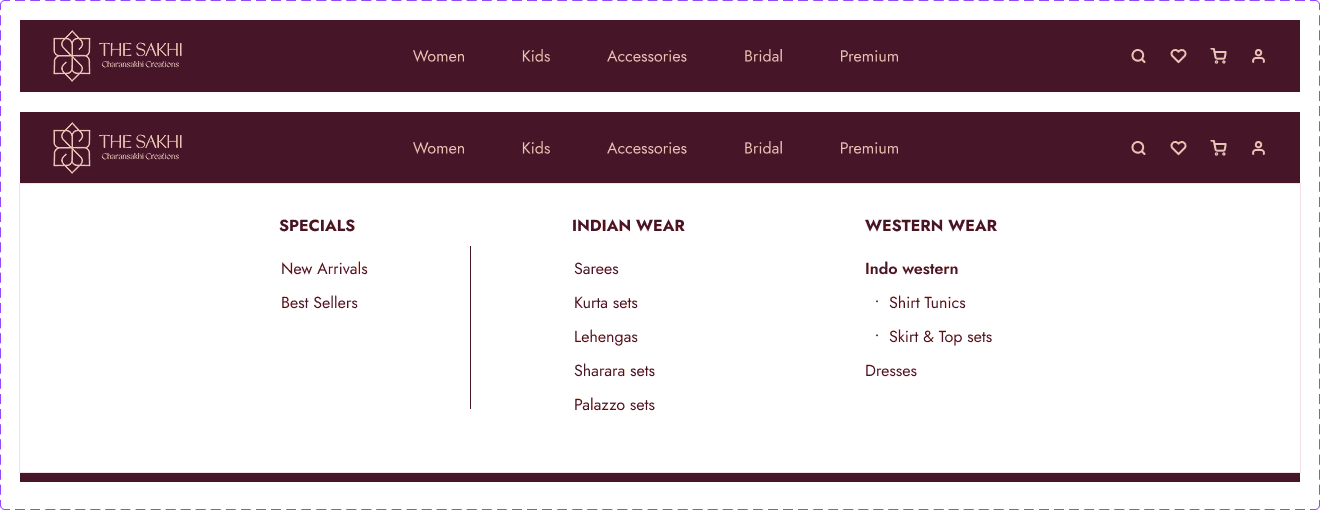
60% User Preference Match Through Card Sorting Analysis
Our card sorting exercise and user interviews revealed three distinct shopping behaviors: customers seeking traditional Indian wear, those preferring Western styles, and users specifically searching for fusion pieces. Based on these insights, we created dedicated Indian and Western sections for clear style preferences, an Indo Western category for fusion seekers, a Specials section featuring New Arrivals and Best Sellers for trend-conscious shoppers, and a specialized Bridal section—ensuring seamless navigation for all user segments.


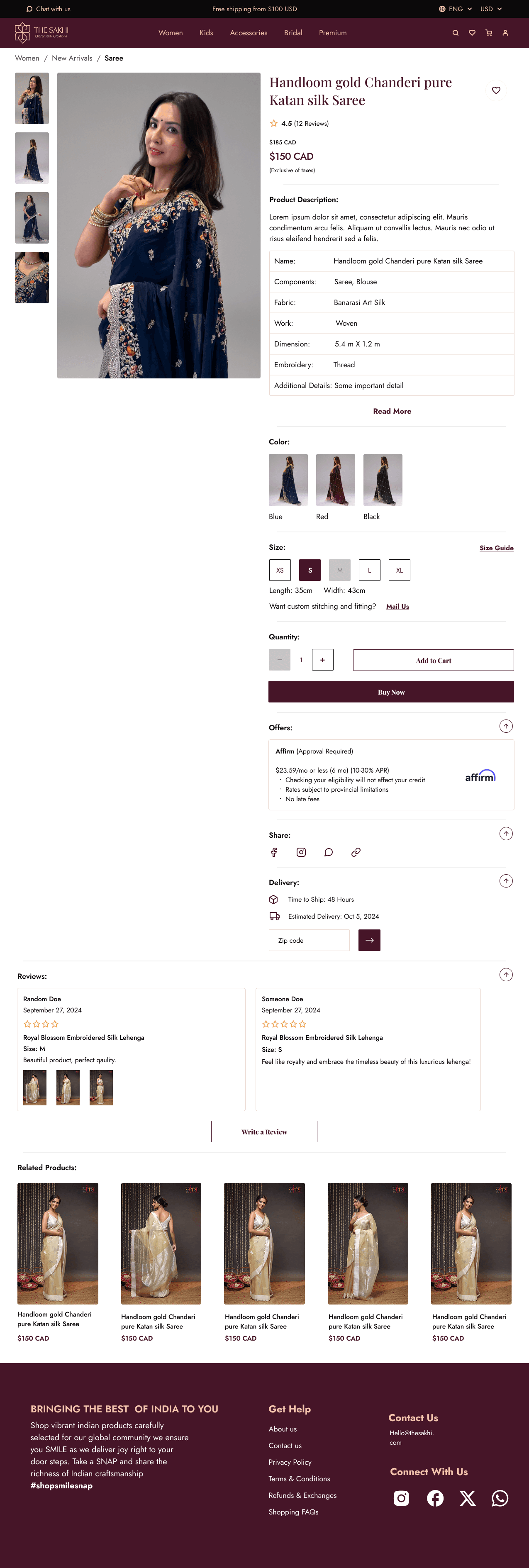
Single-Page Product Design Reduces Bounce Rate Through Consolidated Information
This single-page approach ensures users can access complete product information, read authentic reviews, and explore alternatives all within one smooth, scrollable experience, reducing decision-making time and potential drop-off points in the purchasing journey.
Boosting decision making through clear value propositions
This trust banner in homepage reduces user friction by transparently addressing key purchase concerns upfront—shipping costs, quality, fit, and delivery reliability—eliminating uncertainty and cognitive load in the decision-making process. The clear value propositions and specific thresholds (like "$100 free shipping") build user confidence and reduce cart abandonment by setting proper expectations before users invest time in browsing or selecting products.

Project Outcomes
Based on comprehensive UX research and industry benchmarks for trust signal implementation, the redesigned elements are projected to improve user confidence by 20% and overall engagement by 15-20%. The strategic placement of streamlined information architecture directly addresses key friction points identified through competitive analysis. These trust-building interventions position Sakhi's online store for measurable conversion rate optimization upon launch.
Future Takeaways
This project was a learning curve in ways I didn't expect. When one of our team members left halfway through, I had to step up and take on responsibilities I'd never handled before, which was intimidating but ultimately pushed me to grow. The stakeholder meetings were particularly challenging - I had to learn how to explain design decisions in terms that made business sense, not just user experience sense. I realized that being a good UXer isn't just about creating beautiful, user-friendly designs - it's about being adaptable, communicating effectively across different teams, and making strategic decisions when you don't have all the ideal resources or data you'd like. The whole experience taught me that real-world UX work is messy and requires a lot more problem-solving and collaboration than I initially understood.