role
UX Researcher
skills
Competitive Audit
User Interviews
User Journey
collaborations
Diya Kamboj
Tejasri Addanki
Vinuthna Akurati
Duration
48 hours
OVERVIEW
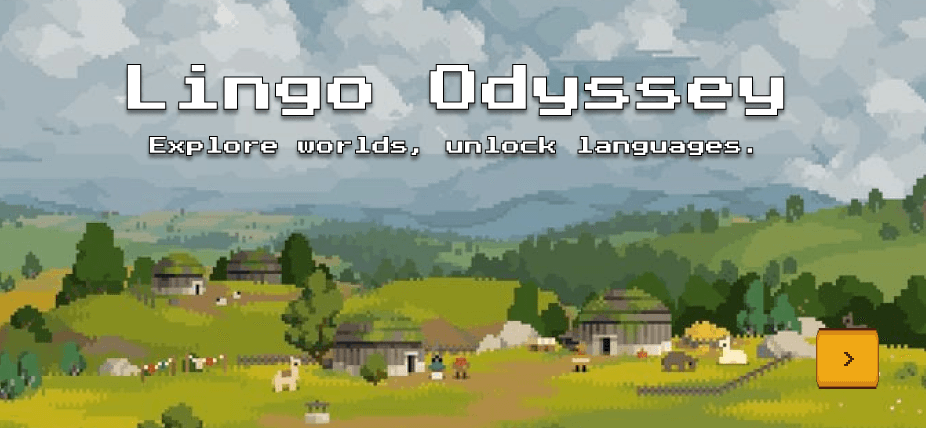
Designing a language-learning experience that keeps users engaged beyond the halfway point through gamification, AI-powered conversations, and visible progress tracking.
THE PROBLEM
Language learning apps see high abandonment rates midway through courses. Through secondary research and user analysis, we found that users lose motivation once novelty wears off, progress feels slow or invisible, and learning becomes repetitive and isolating.
Core Insight
Users struggle to stay motivated and complete language learning journeys once early excitement fades.
Start
High excitement and motivation
Midway Drop
Progress feels unclear, motivation fades
Abandonment
User leaves the app
Research & Insights
We conducted secondary research on language learning behavior, competitive analysis of leading apps, and UX pattern analysis to identify drop-off points and engagement drivers.
Critical Finding
Users leave language learning apps midway because progress feels unclear and learning lacks engaging, interactive reinforcement.
Conversational Practice Priority
82%
Prefer interactive dialogues over static lessons for practical learning
Gamification Drives Retention
74%
Found game-like features motivating (quizzes, quests, story games)
Cultural Immersion Value
68%
Rate cultural learning as important, with strong interest in food, music, and traditions
DESIGN GOAL
How might we help learners stay motivated and feel consistent progress throughout their language learning journey?
KEY DESIGN DECISIONS
Open World Exploration
The Problem
Traditional language apps rely on structured, linear lessons that users find rigid and boring. Learning feels like a chore rather than an adventure, leading to disengagement and abandonment.
People were more engaged when they could explore topics that interested them, rather than follow a set curriculum
Our Solution
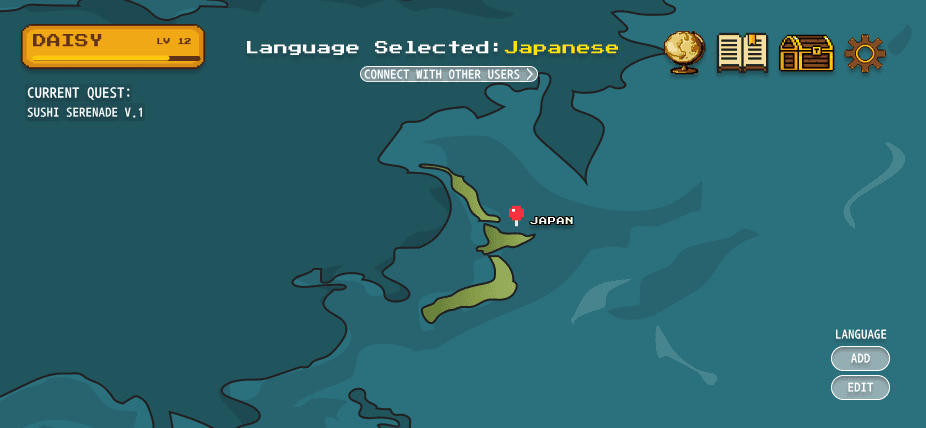
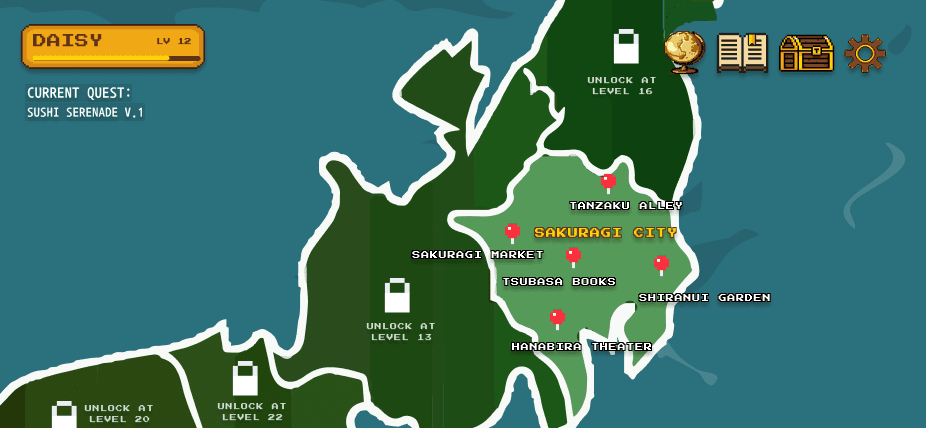
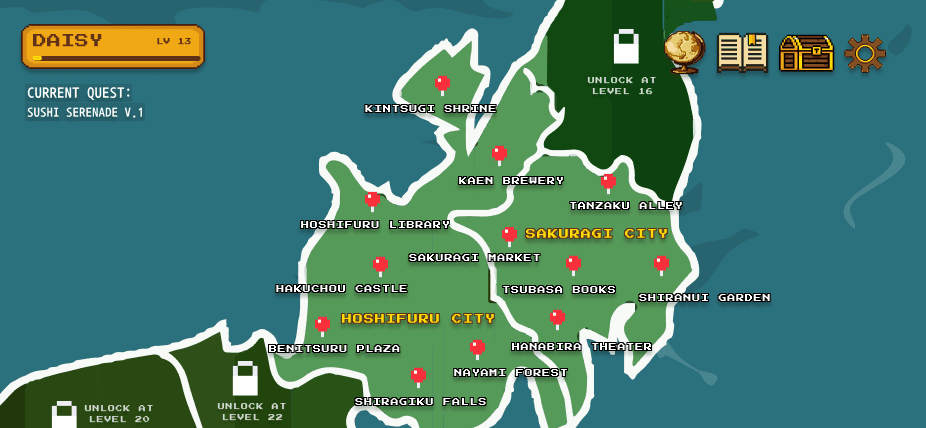
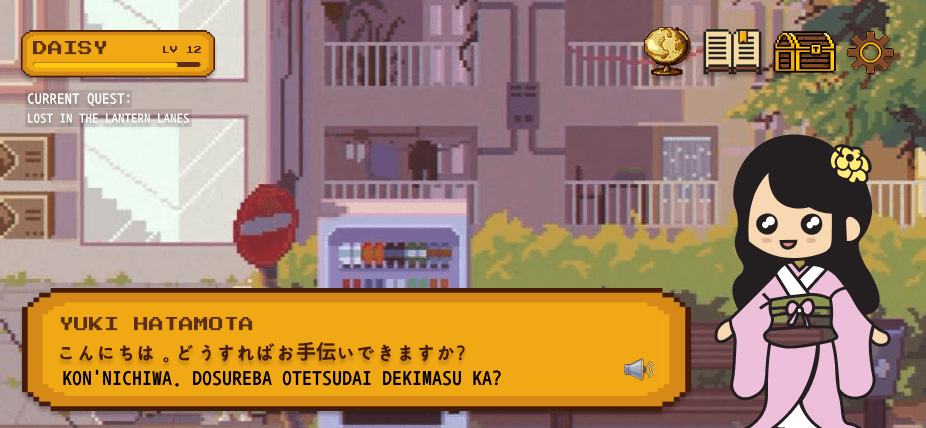
We created a map-based exploration system where learners discover cities, interact with AI-driven NPCs, and complete quests. Instead of passively memorizing vocabulary, users learn through contextual experiences like ordering food at a cafe, asking for directions, or negotiating at a market.
Key Features
Choose your city - Select cities to explore, each with unique markets, cafés, and cultural venues
Progressive Unlocking - New areas unlock as users advance, maintaining excitement
Contextual Learning - Real-world scenarios replace abstract grammar drills
The Impact
Game-based learning improves memory retention and fluency by encouraging experimentation, repetition, and real-time feedback. Users stay engaged longer because they're playing, not studying.
AI-Powered NPC Conversations
The Problem
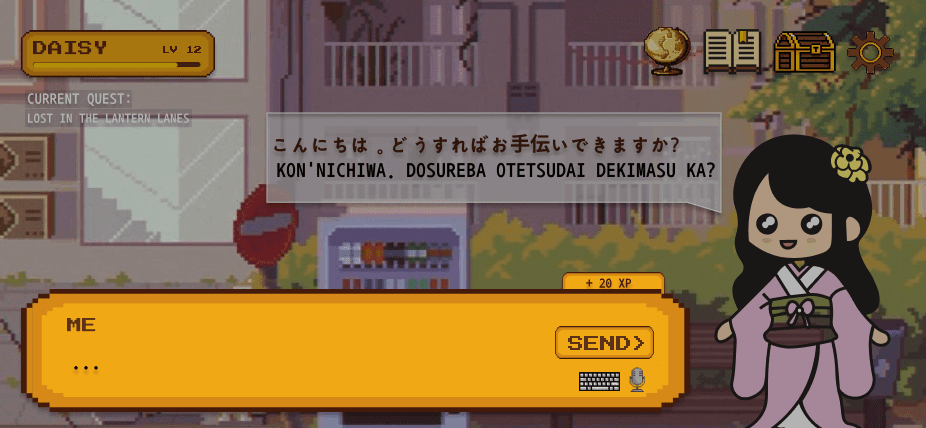
82% of users preferred interactive dialogues over static lessons, but existing apps rely on pre-scripted conversations with word selection banks. Users felt this didn't prepare them for real conversations with native speakers.
"I can pass lessons easily, but freeze when trying to talk to real people."
Our Solution
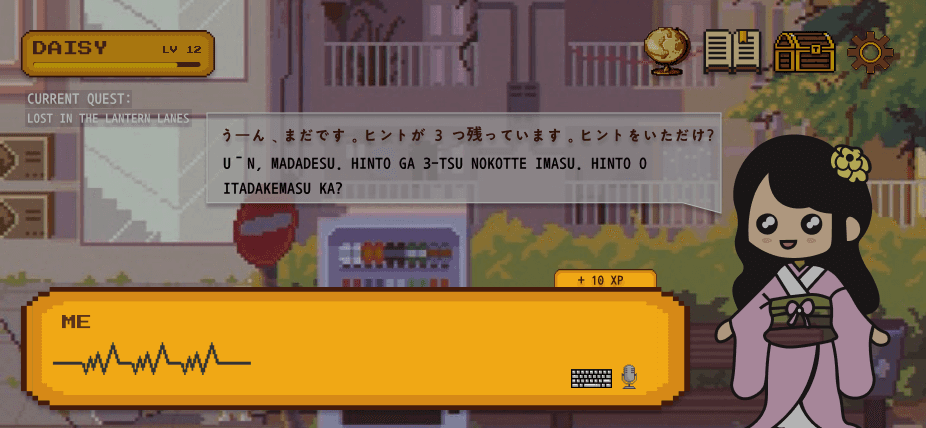
We built adaptive AI NPCs that respond dynamically to user input. Instead of selecting from word banks, users speak (via microphone) or type freely. The AI adjusts quest difficulty based on proficiency and past conversations, creating personalized learning paths.
Key Features
Adaptive Difficulty - AI personalizes conversations based on your skill level
Dynamic Responses - No two conversations are the same, just like real life
The Impact
Users develop conversational confidence through meaningful, contextually relevant interactions. By removing scripted responses, we prepare learners for authentic dialogues, improving both listening and speaking skills simultaneously.
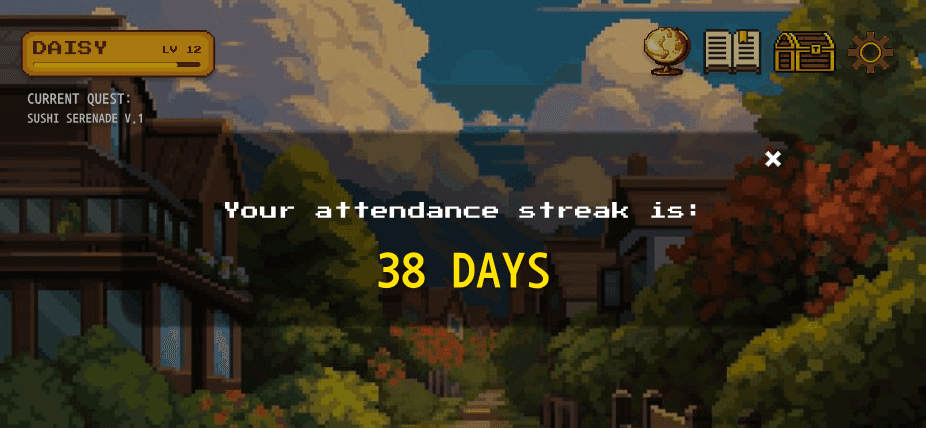
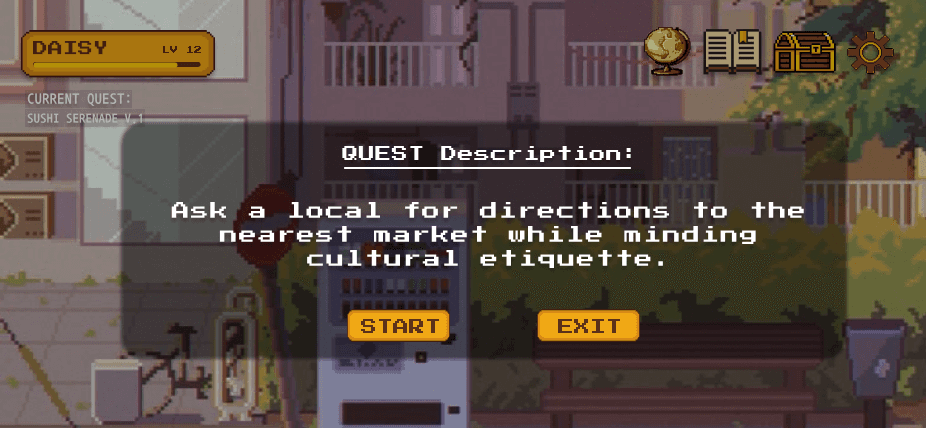
Gamifications Through Quests
The Problem
While 74% of users found game-like features motivating, they reported that existing apps' gamification felt like a distraction rather than an effective learning tool. Streaks and gems felt disconnected from actual language progress.
"I love completing challenges that teach me something useful, not just clicking through lessons for points that don't mean anything."
Our Solution
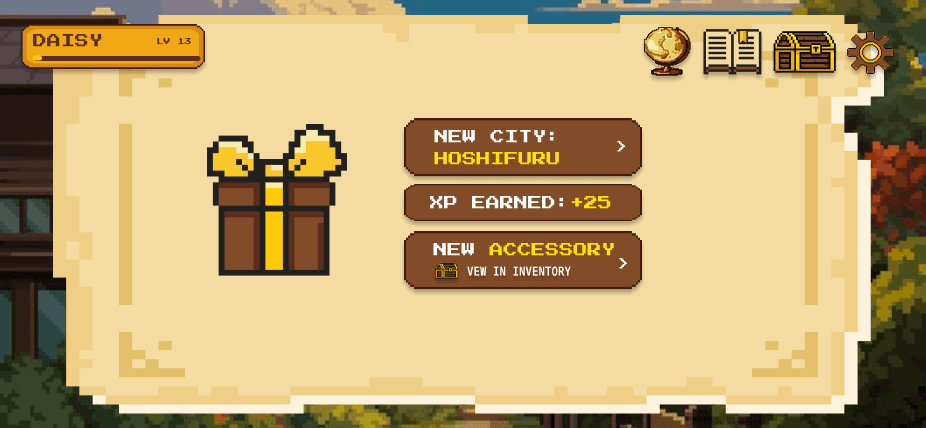
We designed story-driven quests that make learning feel like an adventure. Users earn experience points for completing challenges, unlock accomplishments for mastering skills, and discover cultural easter eggs while exploring. The open-world map lets users choose quest topics based on their interests—whether food, travel, or business conversations.
Key Features
Meaningful Rewards - Unlock new countries, cities, and contents as your learning interest
Story-Driven Quests - Narrative arcs that make learning feel purposeful
Social Connection - Connect with other learners for practice and take an attendance like in school
The Impact
Learning through play reduces cognitive load and increases retention. By giving users choice and autonomy, they progress faster on topics they care about while maintaining motivation through genuine achievement.
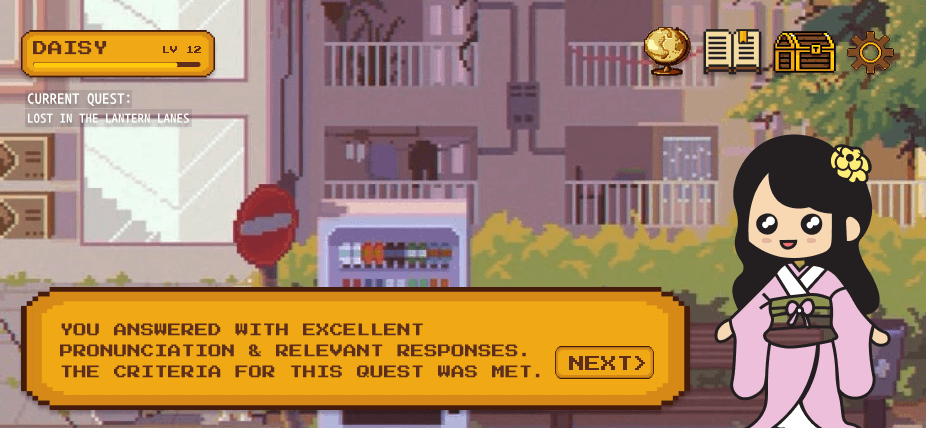
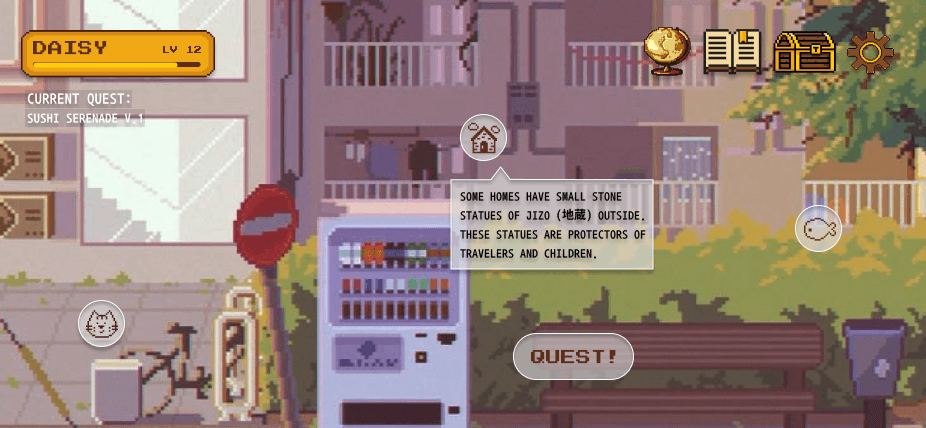
Cultural Integration and Pronunciation Practice
The Problem
Pronunciation practice is as essential, yet most apps treat it as an afterthought. Additionally, the research revealed that cultural learning is highly important, but existing apps focus solely on vocabulary without cultural context.
"I want to sound natural, not robotic. And I want to understand why people say things, not just what they say."
Our Solution
We integrated speech recognition technology that provides real-time pronunciation feedback, helping users develop authentic accents. Cultural storytelling features introduce local customs, traditions, and history through interactive content—embedded naturally within quests and NPC conversations.
Key Features
Interactive Storytelling - Learn history and customs through engaging narratives
Authentic Accents - Practice with native speaker voice models
Real-Time Feedback - AI analyzes pronunciation and suggests improvements
The Impact
Users don't just learn how to speak—they understand why and when to use certain phrases. This cultural awareness creates deeper connections and more meaningful language use, preparing learners for real-world interactions with native speakers.
DESIGN SYSTEM
Color Palette and some components
FFCA0A
F0A815
824D29
EFD79E


NPC characters

Pixelated Typography
Title text
Paragraph Text
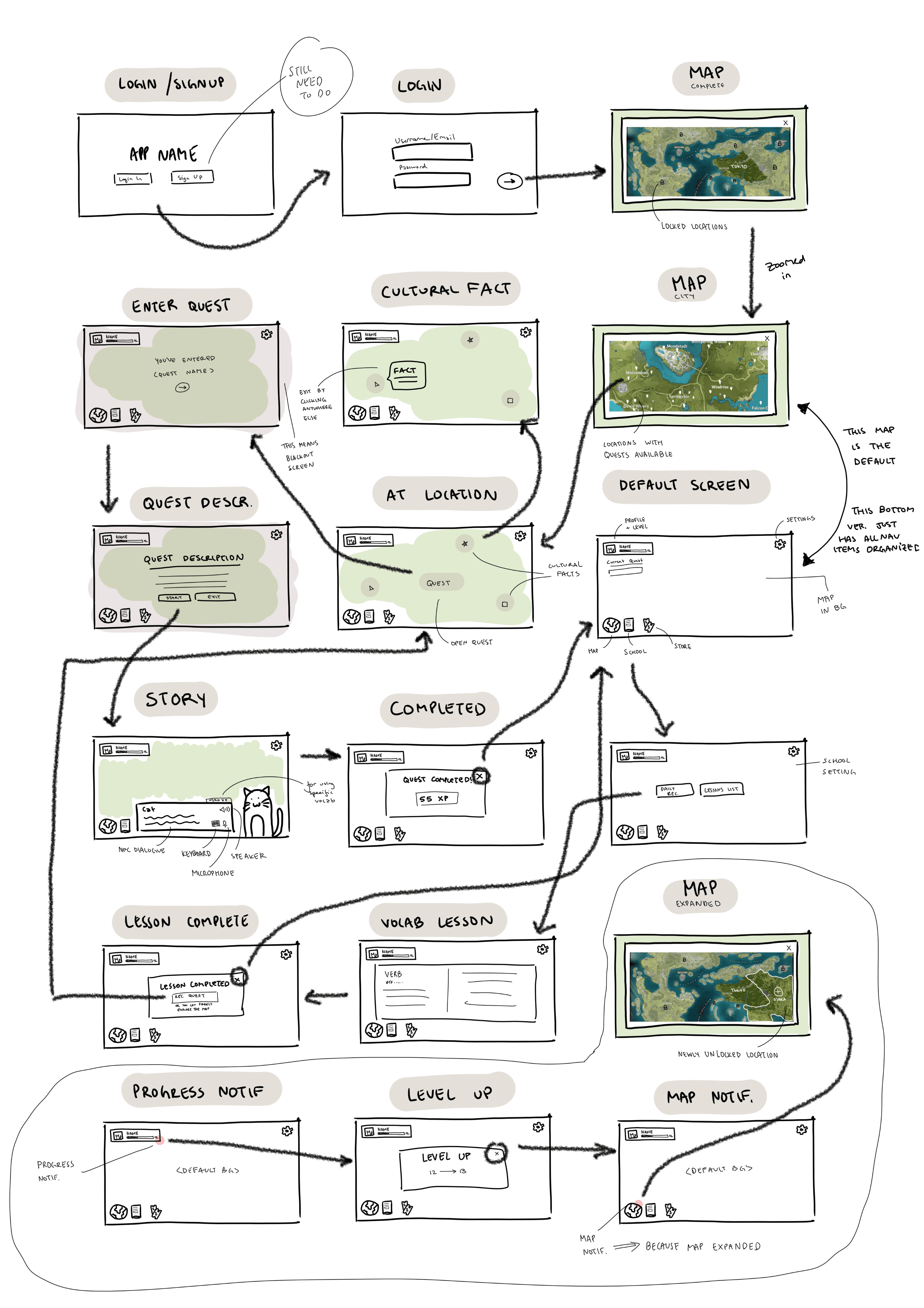
Wireframe
FINAL DESIGN
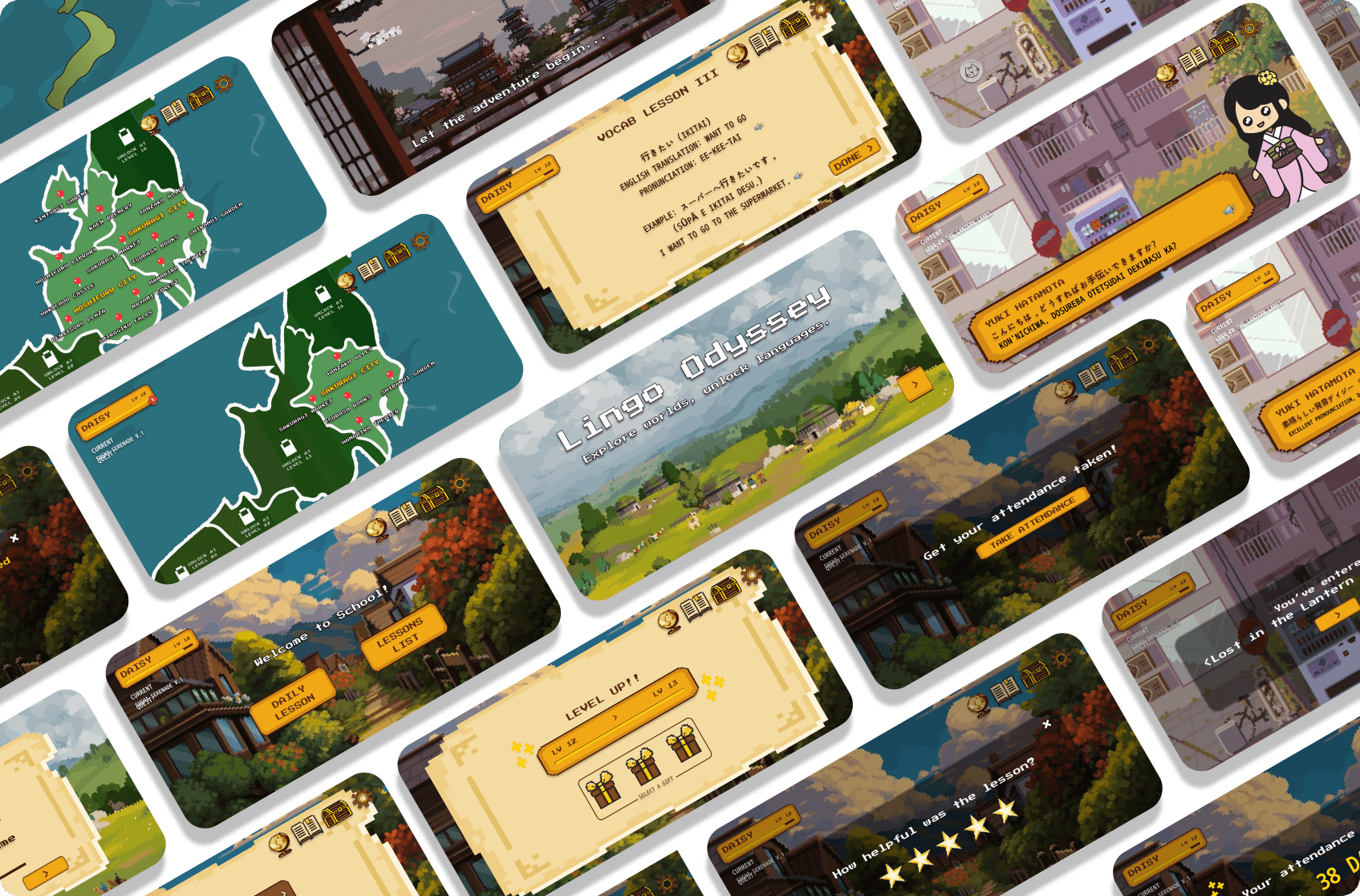
The final solution combines gamification, AI interaction, and clear progress feedback to support users beyond the halfway point of their learning journey.
Projected Impact
Based on research into game-based learning and conversational AI, we anticipate a ~20% increase in user engagement and improved conversational confidence. While these are projected metrics that would need real-world testing, similar approaches in educational gaming have shown that contextual, story-driven learning significantly improves both retention and motivation compared to traditional methods.